
ISO® certification Training Courses

ISO® certification training is a game-changer for both your career and your organization. By mastering globally recognized best practices, you’ll be equipped to drive quality, efficiency, and innovation. This knowledge will empower you to lead positive change, streamline processes, and boost your company’s competitive edge. As businesses increasingly prioritize ISO® compliance, your expertise will become invaluable, positioning you as a key player in your organization’s success. Don’t miss this opportunity to enhance your skills, drive meaningful improvements, and become an indispensable asset. Invest in ISO® certification training – it’s your pathway to professional growth and organizational excellence.
After ISO® Compliance:
Transform your organization: skyrocket quality, efficiency, and market dominance.
Unlock Your Own, and Your Organization’s Full Potential with ISO® Certification Training!


Live Online, Live Onsite & Self-Paced Online
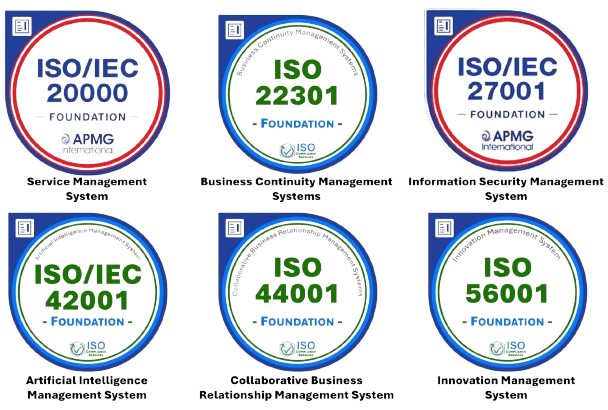
ISO®
foundation
2 Days
*includes the 60-minute exam
*free executive brief included
*self-paced online version available
for ISO/IEC 20000 and 27001
Choose Your Course
Live Online &
Live Onsite

ISO®
implementer
3 Days
*includes the 80-minute practitioner exam or the 50-minute implementer assessment interview
*free coaching included
Choose Your Course
Live Online &
Live Onsite
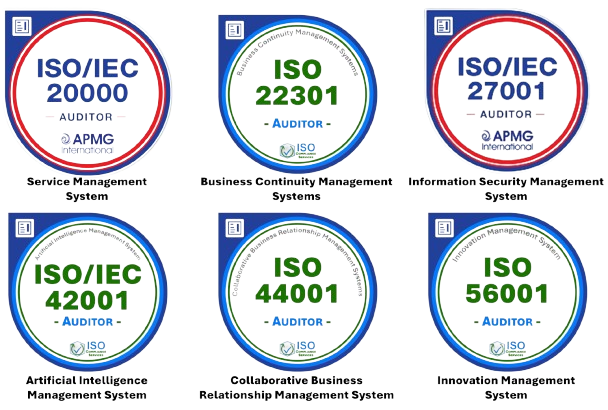
iso®
auditor
2-3 Days
*includes the 60-minute exam
*free coaching included
*2-day course is for experienced auditors determined by your trainer
Choose Your Course
Looking for an onsite class or signing up multiple leaners?
ISO® Certification Courses for Every Proficiency Level
From ISO® newcomers to seasoned pros, we’ve got the courses you need.
Whether you’re diving into implementation or conducting audits, our certification courses have your back every step of the way.
| Comparing the Three Types of Certification Courses | 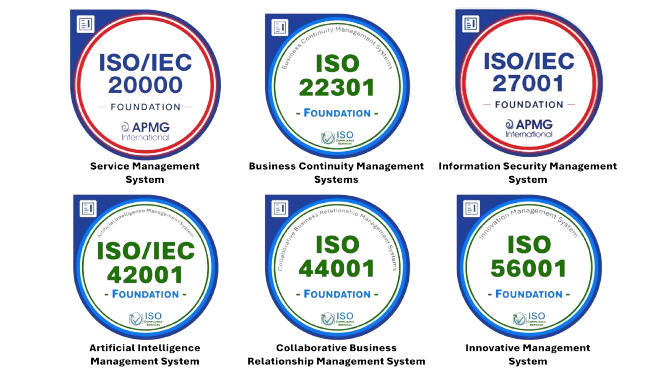 ISO Foundation |  ISO Implementer / Practitioner | 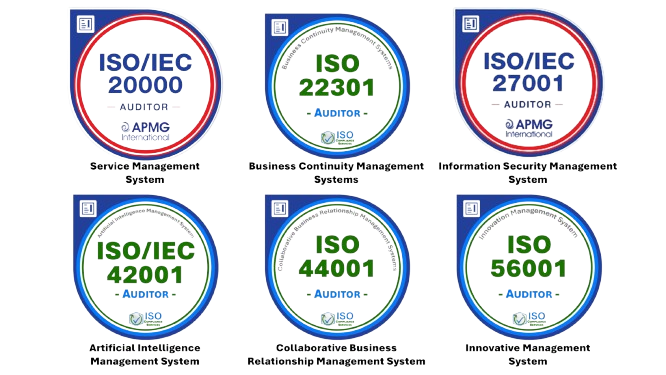 ISO Auditor |
|---|---|---|---|
| Basic Understanding of the Standard |  | ||
| Scope and Purpose of the Standard | | ||
| Key Terms and Definitions | | | |
| All Requirements of the Standard | | | |
| Processes and Objectives | | | |
| Applicability and Scope Definition Requirements | | | |
| Types of Audits and Audit Terminology | | | |
| Understanding the Purpose, Use, and Application of the Standard | | | |
| Advise on Achieving Compliance | | ||
| Advise on Applicability and Scope Definition | | ||
| Explain and Apply the Requirements | | ||
| Explain the use of tools and technology | | ||
| Advise and Assist on Certification Readiness | | | |
| Produce and Assess a Gap Analysis | | ||
| Understand, Create, Apply and Evaluate Processes, Procedures, Plans, and Policies | | ||
| Assist, Advise on, and Assess the Implementation of Continual Improvement Processes | | ||
| Advise, Prepare and Analyze Organizations for a Certification Audit | | ||
| The Relationship Between Standard and Other Applicable ISO Standards and How This Can Be Used To Support the Achievement of Certification | | ||
| The Requirements for Auditing Organizations to Identify Conformity and Improvements Against | | ||
| Conforming with and Producing Auditing Principles, Processes, Procedures, Plans, and Records | | ||
| Applying Auditing Techniques | |
What people are saying
The ISO certification process transformed our company. It streamlined our operations, resulting in a 31% increase in productivity. We’ve seen a marked improvement in customer satisfaction as a result.
Achieving ISO certification was a game-changer for our business. It opened doors to new international markets we couldn’t access before. Our revenue has grown by 42% since certification, largely due to these new opportunities.
ISO certification gave us a significant competitive edge in our industry. It has instilled greater confidence in our clients, attracting high-profile projects we previously couldn’t compete for. We’ve seen a 26% increase in successful bids since becoming certified.
The structured approach of ISO certification helped us identify inefficiencies we didn’t even know existed. By addressing these issues, we’ve achieved substantial cost savings across our organization. Our bottom line has improved by 17% in just the first year post-certification.
Frequently Asked Questions
Contact us if you can’t find your question answered. We’re happy to help you. Always!
The ISO standards are listed in ascending order.
ISO/IEC 20000
ISO/IEC 20000 is an international standard for service management. It specifies requirements for organizations to establish, implement, maintain, and continually improve a service management system (SMS). This standard helps organizations align their services with business needs, customer expectations, improve service quality, and increase customer satisfaction. ISO/IEC 20000 covers various aspects of service management, including service design and service delivery, internal and external customer relationship management, and, planning, resolution, and control processes. By adopting this standard, organizations can demonstrate their commitment to delivering high-quality services and following best practices in service management.
ISO 22301
ISO 22301 is an international standard that focuses on business continuity management systems (BCMS). It provides a framework for organizations to identify potential threats to their operations and build resilience against disruptions. This standard outlines requirements for planning, establishing, implementing, operating, monitoring, reviewing, maintaining, and continually improving a documented management system to protect against, reduce the likelihood of, and ensure recovery from disruptive incidents. ISO 22301 helps organizations of all sizes and types to prepare for, respond to, and recover from unexpected events, ensuring the continuity of critical business functions and minimizing the impact of disasters.
ISO/IEC 27001
ISO/IEC 27001 is an internationally recognized standard for information security management systems (ISMS). It provides a systematic approach to managing sensitive company information, ensuring it remains secure. This standard outlines requirements for establishing, implementing, maintaining, and continually improving an organization’s information security management system. ISO/IEC 27001 helps organizations identify and address information security and cybersecurity risks, implement appropriate controls, and protect the confidentiality, integrity, and availability of their information assets. By adhering to this standard, companies can demonstrate their commitment to information security best practices and compliance with global security requirements.
ISO/IEC 42001
ISO/IEC 42001 is an international standard that specifies requirements for establishing, implementing, maintaining, and continually improving an Artificial Intelligence Management System (AIMS) within organizations. It is designed for entities providing or utilizing AI-based products or services, ensuring responsible development and use of AI systems. ISO/IEC 42001 is the world’s first AI management system standard, providing valuable guidance for this rapidly changing field of technology. It addresses the unique challenges AI poses, such as ethical considerations, transparency, and continuous learning. For organizations, it sets out a structured way to manage risks and opportunities associated with AI, balancing innovation with governance.
ISO 44001
ISO 44001 is the international standard for Collaborative Business Relationship Management Systems. It provides a framework for organizations to identify, develop, and manage their business relationships more effectively. This standard focuses on fostering collaboration between organizations, whether they are partnering for a specific project or maintaining long-term strategic alliances. ISO 44001 helps businesses create value through improved communication, shared goals, and mutual benefits. By implementing this standard, organizations can enhance their ability to work together, manage risks, and achieve better outcomes in their collaborative endeavors.
ISO 56001
ISO 56001 provides requirements and guidance for establishing, implementing, maintaining, and improving an innovation management system. This standard aims to enhance an organization’s ability to innovate consistently and successfully. It applies to all types of organizations regardless of type, size, or the products and services they provide, offering a systematic approach to fostering and managing innovation. ISO 56001 equips organizations with the framework to manage innovation systematically, reducing uncertainty and increasing the likelihood of achieving significant benefits from new products, services, processes, and models. By fostering a culture that supports innovation, organizations can improve their performance, resilience, and competitiveness in the market.
The ISO standards are listed in ascending order.
ISO/IEC 20000 Certification Benefits
Becoming ISO/IEC 20000 certified, which is the international standard for service management , provides a range of benefits for organizations seeking to enhance the quality and efficiency of their services. Here are the key advantages:
1. Enhanced Service Quality
- ISO/IEC 20000 focuses on delivering high-quality services that meet customer and business needs. It provides a framework for improving service delivery, ensuring that services are aligned with business objectives.
2. Increased Customer Satisfaction
- By adhering to best practices in service management, organizations can provide consistent and reliable services, resulting in greater customer satisfaction and trust.
3. Improved Efficiency and Reduced Costs
- The certification emphasizes efficient use of resources and effective process management, which can reduce service outages, downtime, and the costs associated with fixing service issues.
4. Proven Best Practices
- ISO/IEC 20000 is based on service management best practices, giving organizations access to a well-established framework for managing services. This standardization helps improve the effectiveness of service management practices.
5. Alignment with Business Goals
- The certification ensures that services are closely aligned with the organization’s overall business strategy, which helps in delivering value, achieving business objectives, and improving overall performance.
6. Continuous Improvement
- ISO/IEC 20000 promotes a culture of continuous improvement, requiring organizations to regularly assess and improve their service management processes, tools, and capabilities to keep pace with changing business and technology landscapes.
7. Regulatory and Legal Compliance
- Achieving certification can help organizations comply with legal, regulatory, and contractual requirements related to service management. This is particularly important for sectors like finance, healthcare, and government, where compliance is critical.
8. Competitive Advantage
- Certification provides a competitive edge in the marketplace, as it demonstrates that the organization follows internationally recognized best practices in service management. This can help attract new clients and retain existing ones, especially when reliability is a critical business factor.
9. Risk Management and Reduction
- ISO/IEC 20000 helps organizations identify and manage risks associated with service delivery, including risks from system failures, security breaches, or process inefficiencies. This leads to more stable and predictable service outcomes.
10. Clear Roles and Responsibilities
- The standard helps in defining clear roles, responsibilities, and accountabilities within the service management team. This ensures smoother operations, better coordination, and a reduction in errors caused by role ambiguity.
11. Better Supplier and Vendor Management
- The certification includes guidelines for managing external suppliers and service providers, ensuring that third-party services meet agreed-upon quality levels and contribute to the overall service performance.
12. Global Recognition
- As ISO/IEC 20000 is an internationally recognized standard, it enhances the organization’s credibility on a global scale, making it easier to operate and compete in international markets.
13. Stronger Security and Data Protection
- Although the primary focus of ISO/IEC 20000 is service management, it also addresses the need for secure, reliable services. This can complement security frameworks like ISO/IEC 27001, helping organizations ensure data protection and security.
14. Integration with Other Standards
- ISO/IEC 20000 can be integrated with other management system standards such as ISO 9001 (quality management) or ISO/IEC 27001 (information security management), creating a more comprehensive and unified management system.
15. Fostering Innovation
- With well-established processes in place, organizations can focus on innovation and the development of new services, driving long-term business growth and staying ahead in the competitive market.
In summary, achieving ISO/IEC 20000 certification ensures that services are managed effectively and efficiently, improving customer satisfaction, service reliability, and operational performance. It also provides a framework for continuous improvement, risk management, and alignment of services with business goals, offering long-term strategic advantages.
ISO 22301 Certification Benefits
Becoming ISO 22301 certified, which is the international standard for business continuity management systems (BCMS), provides a variety of benefits to organizations. Here are some key advantages:
1. Increased Resilience
- ISO 22301 helps organizations prepare for, respond to, and recover from disruptive incidents, such as natural disasters, cyberattacks, or other crises. This ensures minimal downtime and faster recovery times.
2. Risk Management
- The certification encourages the identification and management of risks that could disrupt business operations. This proactive approach allows organizations to prevent incidents before they happen or mitigate their impact.
3. Improved Customer Confidence
- ISO 22301 certification demonstrates a commitment to operational reliability and resilience, which reassures customers that your business can continue delivering products or services even during unexpected disruptions.
4. Regulatory Compliance
- Many industries require companies to meet specific regulatory standards for business continuity. Being ISO 22301 certified ensures compliance with legal, regulatory, and industry-specific requirements.
5. Competitive Advantage
- Certification can differentiate a business from competitors by showcasing its commitment to preparedness, risk management, and continuity planning. This can be particularly appealing to potential customers or partners.
6. Operational Efficiency
- The standard provides a framework for streamlining business continuity processes, which can improve operational efficiency, reduce duplication of effort, and eliminate gaps in risk management strategies.
7. Better Crisis Communication
- ISO 22301 requires organizations to establish and maintain effective communication channels during crises, ensuring clear and timely information for stakeholders, employees, and customers.
8. Cultural Shift Toward Resilience
- The process of certification fosters a culture of resilience within the organization. Employees become more aware of risks and better equipped to handle disruptions, leading to a more robust workforce.
9. Global Recognition
- As ISO 22301 is an internationally recognized standard, certification can open doors to international markets and partnerships by meeting global expectations for business continuity.
10. Continuous Improvement
- ISO 22301 requires regular reviews and updates to the business continuity management system, encouraging organizations to continually assess and improve their processes in response to evolving risks.
In summary, achieving ISO 22301 certification enhances an organization’s preparedness, builds trust with stakeholders, and offers long-term operational benefits by embedding a structured approach to managing disruptions.
ISO/IEC 27001 Certification Benefits
Becoming ISO/IEC 27001 certified, which is the international standard for information security management systems (ISMS), brings significant advantages to organizations. This standard focuses on managing and protecting sensitive information, ensuring its confidentiality, integrity, and availability. Here are the key benefits:
1. Enhanced Information Security
- ISO/IEC 27001 provides a structured framework for managing sensitive information, ensuring that data is protected from unauthorized access, breaches, or loss. This includes safeguarding customer data, financial information, intellectual property, and employee records.
2. Risk Management and Reduction
- The standard requires organizations to assess risks related to information security and implement controls to manage and mitigate those risks. This proactive approach minimizes the likelihood of security incidents and reduces potential damage from data breaches or cyberattacks.
3. Compliance with Legal and Regulatory Requirements
- Achieving ISO/IEC 27001 certification ensures compliance with legal, regulatory, and contractual obligations related to information security. This is particularly important in industries where data protection is heavily regulated, such as healthcare, finance, and government sectors.
4. Improved Trust and Credibility
- Certification demonstrates a strong commitment to information security, which boosts customer confidence and trust. It shows clients, partners, and stakeholders that their sensitive information will be handled securely and responsibly.
5. Competitive Advantage
- ISO/IEC 27001 certification can differentiate an organization in the marketplace by showing that it adheres to international best practices in information security. It can help win new business, particularly when dealing with clients who require strong security measures from their partners.
6. Protection Against Cyber Threats
- The certification helps protect against the growing threat of cyberattacks, data breaches, and other malicious activities. By implementing robust security controls, organizations can safeguard their systems and data, reducing exposure to threats like hacking, ransomware, and phishing.
7. Business Continuity
- Information security is critical to business continuity. ISO/IEC 27001 ensures that organizations have measures in place to continue operating during and after security incidents or breaches, minimizing downtime and service disruptions.
8. Structured Approach to Security Management
- ISO/IEC 27001 provides a formal, risk-based approach to managing information security. It covers people, processes, and technology, ensuring a holistic strategy to protect data. This organized framework makes it easier to identify and address vulnerabilities.
9. Improved Internal Processes
- The certification process encourages organizations to streamline their internal security practices, eliminating inefficiencies and ensuring that roles and responsibilities are clearly defined. This leads to better coordination, fewer security incidents, and a more security-conscious organizational culture.
10. Alignment with Business Objectives
- By integrating information security management into the organization’s broader strategy, ISO/IEC 27001 ensures that security measures are aligned with business goals. This enables the organization to strike a balance between security and operational efficiency.
11. Continual Improvement
- The standard promotes continuous monitoring, review, and improvement of security processes. Regular audits ensure that the organization remains compliant and that its information security management system evolves to meet new threats and changing business environments.
12. Improved Supplier and Third-Party Management
- ISO/IEC 27001 includes controls for managing relationships with third-party vendors and suppliers. Organizations can ensure that external partners also adhere to high security standards, reducing risks from external sources.
13. Global Recognition
- ISO/IEC 27001 is recognized internationally, providing credibility across global markets. Certification can facilitate international business operations and partnerships, as it signals adherence to widely accepted security standards.
14. Reduced Costs Associated with Security Incidents
- By reducing the likelihood of security breaches and data leaks, organizations can avoid the significant costs associated with these incidents, including legal penalties, customer loss, and reputational damage.
15. Support for Other Certifications
- ISO/IEC 27001 can be integrated with other management system standards, such as ISO 9001 (quality management) and ISO/IEC 20000 (IT service management). This allows organizations to develop a unified, comprehensive management system that addresses various aspects of business operations.
16. Better Incident Response
- ISO/IEC 27001 emphasizes the importance of a well-structured incident response plan. This helps organizations quickly detect, respond to, and recover from security incidents, reducing the impact of breaches or other disruptions.
17. Cultural Shift Toward Security Awareness
- The certification process raises awareness of information security across the entire organization. Employees become more vigilant and responsible for safeguarding sensitive data, fostering a culture where security is prioritized.
In summary, ISO/IEC 27001 certification provides a comprehensive approach to managing and protecting sensitive information, enhancing security practices, and building trust with customers and partners. It helps reduce risks, ensures compliance with regulatory standards, and provides a competitive edge in the marketplace, all while fostering continuous improvement and security awareness within the organization.
ISO/IEC 42001 Certification Benefits
ISO/IEC 42001 certification focuses on the management of artificial intelligence (AI) systems through an AI Management System (AIMS), ensuring responsible and ethical use of AI technologies. The benefits of obtaining this certification are numerous:
1. Building Trust and Brand Recognition
- ISO/IEC 42001 certification signals to stakeholders, customers, and partners that an organization is committed to responsible AI development. By adhering to this framework, organizations demonstrate that they are taking the necessary steps to ensure AI transparency, fairness, and accountability, which builds trust and credibility.
2. Enhancing Operational Efficiency
- Implementing AI under the ISO/IEC 42001 framework helps organizations optimize AI processes, ensuring they are efficient and aligned with business objectives. This certification ensures AI systems are deployed effectively, reducing operational inefficiencies and enabling more accurate decision-making.
3. Mitigating AI-Related Risks
- The certification emphasizes ethical AI practices, which include managing risks related to bias, privacy, and data security. Organizations with ISO/IEC 42001 can better manage the risks associated with AI, ensuring compliance with emerging regulations and addressing public concerns around AI ethics.
4. Future-Proofing and Innovation
- By integrating a structured AI management system, organizations are better equipped to stay ahead of AI trends and adapt to evolving technology landscapes. This allows companies to innovate while maintaining control over AI deployments, enabling long-term growth and competitiveness.
5. Improved Regulatory Compliance
- ISO/IEC 42001 helps organizations meet the growing number of AI-related regulations. It supports organizations in aligning their AI strategies with legal requirements, thereby navigating the complex regulatory landscape with confidence.
6. Supporting Ethical AI Decision-Making
- Certified organizations are positioned to make informed and ethical AI-related decisions. They ensure that AI outputs are reliable, unbiased, and aligned with ethical principles, which is critical in sectors like finance, healthcare, and law.
In summary, ISO/IEC 42001 certification helps organizations leverage AI responsibly, aligning it with business objectives, managing risks, and fostering innovation while ensuring ethical governance.
ISO 44001 Certification Benefits
ISO 44001 certification focuses on establishing and managing collaborative business relationships. Here are the key benefits of becoming ISO 44001 certified:
1. Improved Business Relationships
- ISO 44001 helps foster collaborative working by creating structured approaches to managing relationships with suppliers, partners, and internal teams. This leads to improved communication, mutual understanding, and conflict resolution, making it easier to manage long-term contracts and avoid disputes.
2. Competitive Advantage
- Certification can open new business opportunities, particularly in sectors where collaboration is essential for large projects, like construction, defense, and utilities. It demonstrates a commitment to collaborative success and is often a key requirement for procurement, helping organizations differentiate themselves during tenders.
3. Operational Efficiency and Cost Reduction
- By improving relationship management, ISO 44001 certification can lead to reduced operating costs. It enhances the efficiency of joint projects through shared resources, knowledge, and skills, leading to better results with fewer resources.
4. Enhanced Risk Management
- The certification strengthens risk management by ensuring consistency and traceability in collaborative ventures. This makes it easier to identify and rectify potential issues before they escalate.
5. Building Trust and Long-Term Relationships
- ISO 44001 helps organizations build trust with partners and stakeholders by providing a transparent, mutually beneficial framework. It fosters trustworthy collaborations that are more sustainable and adaptable to market changes.
Overall, ISO 44001 enhances an organization’s ability to manage collaborative ventures effectively, leading to better performance, reduced risks, and more valuable partnerships.
ISO 56001 Certification Benefits
ISO 56001 certification, focused on innovation management, offers numerous benefits for organizations aiming to enhance their innovation processes and capabilities. Here are the key advantages:
1. Structured Innovation Processes
- ISO 56001 provides a clear framework for establishing, implementing, and improving innovation management systems (IMS), reducing uncertainty in innovation projects. It ensures that organizations can manage innovation activities systematically and effectively, which leads to more consistent results and higher success rates.
2. Increased Innovation Performance
- By adopting ISO 56001, companies can enhance their innovation capabilities and performance. This standard helps organizations develop new products, services, and processes that add value to both the company and its customers, leading to improved competitiveness and resilience.
3. Improved Collaboration and Partnerships
- The certification fosters better collaboration both internally and externally. It helps organizations build stronger relationships within the (service and product) value chain and with innovation partners, facilitating joint efforts in innovation ecosystems.
4. Attracting Investment and Funding
- ISO 56001 certification can boost the credibility of an organization’s innovation activities, making it more attractive to investors, funding bodies, and potential partners. It demonstrates that the company follows best practices in managing innovation, which can be crucial for securing financial support.
5. Building a Sustainable Innovation Culture
- The certification promotes continuous improvement in innovation processes and aligns with sustainable business performance. It also supports long-term innovation strategies, enabling organizations to adapt to changing environments and emerging trends.
6. Integration with Other Management Systems
- ISO 56001 is designed to be compatible with other standards like ISO/IEC 20000 (Service Management) and ISO 33001 (Risk Management), allowing organizations to integrate innovation management with other key operational activities.
Overall, ISO 56001 certification is an essential tool for organizations looking to professionalize their innovation efforts, increase their competitive edge, and build lasting value through structured and sustainable innovation management.
The short answer to this question is “No”. ISO certification complements your efforts so far.
When switching to ISO certification, you do not need to start over, especially if you’ve already invested in adopting best practices. ISO standards, such as ISO 9001 (Quality Management), ISO/IEC 20000 (service management), ISO/IEC 27001 (Information Security), or ISO 56001 (Innovation Management), are designed to be compatible with many existing best practices and management systems. Here’s why:
1. ISO Standards Build on Existing Frameworks
- Many ISO standards are built using a High-Level Structure (HLS), which means they share a common framework across different areas like quality, environmental, and information security management. This allows you to integrate new ISO standards with existing systems without disrupting what’s already working.
2. Best Practices Often Align with ISO Requirements
- The best practices you’ve already implemented may already meet many of the ISO requirements. ISO certification often formalizes these practices, providing structure and documentation to ensure consistency and improvement. For example, practices around risk management, customer focus, and continuous improvement are key in many ISO standards and many best-practice frameworks.
3. Gap Analysis Instead of Starting Over
- Instead of starting from scratch, most organizations undergo a gap analysis when transitioning to ISO certification. This process identifies areas where current practices align with ISO requirements and where minor adjustments are needed. It’s a matter of refining, documenting, and formalizing existing practices.
4. Focus on Continuous Improvement
- ISO standards emphasize continuous improvement rather than a one-time overhaul. If you’ve already invested in good practices, the transition will likely focus on enhancing and improving those processes rather than replacing them.
In summary, your previous investments in best practices will likely complement and support the ISO certification process. The goal is to build on what you already have, not to start over.
Purchasing an ISO® standard offers several key benefits to organizations and individuals looking to improve processes, ensure compliance, or gain competitive advantage. Here are some of the primary benefits:
1. Access to Best Practices
- ISO standards represent internationally recognized best practices across various industries and sectors. By purchasing an ISO standard, you gain a comprehensive framework designed by experts, which can guide your organization in areas such as quality, safety, environmental management, information security, and innovation.
2. Structured Framework for Improvement
- ISO standards provide a structured and systematic approach to improving your processes and management systems. They offer clear guidelines and principles that you can follow to enhance performance, reduce inefficiencies, and drive continuous improvement.
3. Compliance and Certification Preparation
- If you’re preparing for ISO certification, purchasing the standard is essential. It ensures that you are fully aware of the requirements needed for compliance, which is crucial for successful certification audits. Compliance with ISO standards can also help meet regulatory and contractual requirements.
4. International Recognition and Credibility
- Using ISO standards helps your organization achieve global recognition. ISO is trusted worldwide, and adhering to its standards enhances your organization’s credibility with customers, partners, and regulators. It’s a way to signal commitment to quality, safety, and reliability.
5. Improved Risk Management
- Many ISO standards, such as ISO 31000 for risk management, ISO 22301 for business continuity, ISO/IEC 42001 for artificial intelligence, or ISO/IEC 27001 for information security, provide methodologies to identify, manage, and mitigate risks. Purchasing these standards gives you access to tools that improve risk management across various aspects of your business.
6. Guidance for Implementation
- ISO standards come with detailed guidelines, which are invaluable in helping organizations implement effective systems. This reduces ambiguity and speeds up the process of aligning your operations with recognized standards.
7. Better Decision-Making
- ISO standards promote data-driven and systematic decision-making processes. This helps organizations improve their decision-making frameworks by focusing on evidence-based management and performance metrics.
8. Cost Savings
- By following ISO standards, organizations can achieve cost savings through improved efficiencies, reduction of waste, and better resource management. For example, ISO/IEC 20000 (Service Management) helps streamline operations and reduce errors, ultimately lowering operational costs.
In conclusion, purchasing an ISO standard provides you with a wealth of knowledge, helps streamline your processes, and positions your organization to succeed on a global scale.
The ISO standards are listed in ascending order.
ISO/IEC 20000 Certification Training Participants
   | Service Owners, service managers, process owners and practitioners, product owners Those involved in designing, implementing, and managing services within an organization. Managers and directors: Leaders responsible for overseeing business operations and service delivery Program managers and project managers Quality managers and organizational change managers Consultants, trainers, and learning & development staff Certification auditors and internal auditors Business and supplier/vendor relationship managers. Professionals seeking career advancement in service management. Organizations planning to implement ISO/IEC 20000 or improve their existing IT service management systems. |
ISO 22301 Certification Training Participants
   | Business Continuity Managers Risk Management Professionals Disaster Recovery Specialists IT Managers and Directors Operations Managers: Compliance Officers Quality Assurance Managers Security Managers Senior Executives Consultants Auditors Emergency Response Team Members Supply Chain Managers Human Resource Managers Professionals seeking career advancement in business continuity management. |
ISO/IEC 27001 Certification Training Participants
   | Information Security Managers IT Managers and Directors Compliance Officers Risk Management Professionals Data Protection Officers Network and System Administrators Cybersecurity Specialists Auditors Consultants CIOs and CISOs Quality Assurance Managers Legal and Regulatory Professionals Program and Project Managers Business Analysts HR Managers Professionals seeking career advancement in information security management. |
ISO/IEC 42001 Certification Training Participants
   | AI Project Managers: Data Scientists and AI Engineers CTOs and CIOs AI Ethics Officers Risk Management Professionals Compliance Officers Quality Assurance Managers IT Managers and Directors Business Analysts Legal and Regulatory Professionals AI Auditors AI Consultants Research and Development Managers Product Managers Information Security Managers HR Managers Executives and Decision-makers Professionals seeking career advancement in AI management and governance. |
ISO 44001 Certification Training Participants
   | Business Relationship Managers Supply Chain Managers Project Managers Alliance Managers Procurement Managers Contract Managers Account Managers Sales and Business Development Managers Operations Managers Quality Managers Risk Managers Senior Executives Consultants HR Managers Legal Professionals Change Management Specialists Marketing Managers Innovation Managers Auditors Professionals seeking career advancement in relationship management and collaborative business practices. |
ISO 56001 Certification Training Participants
   | Innovation Managers R&D Directors Chief Innovation Officers (CINOs) Product and Service Managers Business Strategy Managers Program and Project Managers Continuous Improvement Specialists Quality Managers Knowledge Management Professionals Technology Transfer Managers Entrepreneurs and Startup Founders Design Thinking Specialists Change Management Professionals HR Managers Marketing Managers Business Analysts Consultants Risk Managers Sustainability and Resilience Managers Intellectual Property Managers Open Innovation Specialists Innovation Auditors Professionals seeking career advancement in innovation management. |
Yes, an organization can definitely benefit from an ISO® standard without seeking formal ISO certification. Here are some key ways organizations can benefit:
Best practices implementation
ISO® standards represent internationally recognized best practices. Implementing these can improve processes and efficiency, even without certification.
Internal benchmarking
Organizations can use ISO® standards as a framework to assess and improve their current practices.
Risk management
Many ISO® standards include risk assessment and management principles, which can be valuable for any organization.
Customer confidence
While not certified, an organization can still communicate to customers that they follow ISO® guidelines, potentially increasing trust.
Continuous improvement
The Plan-Do-Check-Act cycle in many ISO® standards provides a framework for ongoing improvement.
Preparation for future certification
Implementing ISO® standards informally can make eventual certification easier if desired later.
Employee engagement
Using ISO® standards can provide clear guidelines for employees, potentially improving job satisfaction and performance.
Cost savings
Improved processes and risk management can lead to cost reductions, even without certification.
Competitive advantage
Adhering to international standards can differentiate an organization from competitors.
Legal compliance
Many ISO® standards align with regulatory requirements, helping ensure compliance.
Knowledge acquisition
Studying and implementing ISO® standards can increase organizational knowledge and capabilities.
While certification provides formal recognition and may be required by some clients or in certain industries, the core benefits of ISO® standards can be realized through implementation alone. This approach allows organizations to tailor the standard to their needs without the costs and formalities of certification.
ISO® Foundation Certification Training
An ISO® Foundation course covers the fundamental principles and concepts of ISO® standards, providing participants with a solid understanding of the certification process and how it applies to their organization. Here are the key topics typically taught:
1️⃣ Introduction to ISO Standard:
- Overview of ISO® and its role in global standardization.
- Explanation of the ISO® standards and any ISO® standard it integrates with or best practices framework that complements the standard.
2️⃣ Benefits of ISO Certification:
- Why ISO® certification is valuable for organizations.
- Business benefits, such as improved efficiency, customer satisfaction, and market competitiveness.
3️⃣ ISO Management System Basics:
- Key principles of management systems (e.g., Plan-Do-Check-Act cycle).
- How management systems help organizations meet ISO® requirements.
4️⃣ ISO Structure and Key Terms:
- Common structure of ISO standards (e.g., Annex SL for consistency across standards).
- Definitions of terms like “risk,” “non-conformance,” “audit,” and “corrective action.”
5️⃣ ISO Requirements:
- A breakdown of the specific clauses found in the standard relevant to the course (e.g., ISO 22301 focuses on business continuity management, ISO/IEC 27001 on information security).
- Explanation of key clauses, such as context of the organization, leadership, planning, support, operation, performance evaluation, and improvement.
6️⃣ Implementing an ISO Management System:
- Steps to implement ISO® standards in an organization.
- Identifying the necessary resources, roles, and responsibilities for successful implementation.
7️⃣ Audit and Certification Process:
- Overview of the ISO® certification process, including internal and external audits.
- Types of audits (first-party, second-party, third-party).
- The role of a certification body and what to expect during the audit process.
8️⃣ Risk-Based Thinking:
- Introduction to risk management in the context of ISO® standards.
- How to apply risk-based thinking to enhance decision-making and improve organizational resilience.
9️⃣ Continuous Improvement:
- Importance of continual improvement as part of ISO® standards.
- Tools and techniques for driving improvement (e.g., root cause analysis, corrective actions).
🔟 Documentation and Records Management:
- The role of documentation in ISO® compliance.
- Key documents required (e.g., policies, procedures, work instructions) and how to maintain them.
By the end of the course, participants are equipped with a comprehensive understanding of ISO® standards, the certification process, and practical steps for implementation in their organizations.
ISO® Practitioner or Implementer Certification Training
An ISO® Implementer course is designed to provide participants with the knowledge and skills needed to successfully implement an ISO® management system within their organization. This course is more in-depth than a foundation course and focuses on practical aspects of ISO® implementation. Below are the key topics typically taught:
1️⃣ Deep Dive into ISO Standards:
- Detailed understanding of the specific ISO® standard being implemented (e.g., ISO 9001, ISO/IEC 27001, ISO/IEC 20000-1).
- How the clauses and requirements of the standard apply to various business processes.
2️⃣ Planning and Initiating the Implementation:
- How to plan for ISO® implementation, including setting objectives, timelines, and resource allocation.
- Steps to establish the scope of the management system, identifying the context of the organization, and understanding stakeholder requirements.
3️⃣ Conducting a Gap Analysis:
- How to perform a gap analysis to compare current practices with the requirements of the ISO standard.
- Identifying areas for improvement and action planning to bridge gaps.
4️⃣ Developing ISO Policies and Procedures:
- Guidance on drafting ISO®-compliant policies, procedures, and processes specific to the organization’s needs.
- Best practices for writing clear and effective documentation that meets ISO® requirements.
5️⃣ Roles and Responsibilities:
- Defining roles and responsibilities for key personnel involved in the ISO® implementation process.
- How to establish leadership commitment and assign responsibilities across different teams.
6️⃣ Risk Management and Risk-Based Thinking:
- Practical application of risk-based thinking, which is fundamental to many ISO® standards.
- How to identify, assess, and prioritize risks and opportunities related to the management system.
7️⃣ Establishing and Managing Internal Audits:
- How to develop an internal audit program in line with ISO® requirements.
- Planning, conducting, and reporting internal audits to monitor compliance with the management system.
8️⃣ Corrective Actions and Continuous Improvement:
- How to manage non-conformities and apply corrective actions to resolve issues.
- Techniques for continual improvement using tools like root cause analysis, corrective action planning, and performance monitoring.
9️⃣ Training and Awareness:
- Strategies for ensuring that all relevant employees are aware of and trained in ISO® requirements.
- How to embed the management system into the culture of the organization, ensuring full team buy-in and participation.
🔟 Performance Evaluation and Monitoring:
- Developing and implementing key performance indicators (KPIs) to measure the effectiveness of the management system.
- Monitoring and reviewing processes to ensure continual alignment with ISO® standards.
1️⃣1️⃣ Document Control and Record Keeping:
- Establishing a robust document control system to manage policies, procedures, and other key documents.
- Ensuring accurate record-keeping for audits, non-conformities, and continual improvement.
1️⃣2️⃣ Preparing for Certification:
- How to prepare for the external certification audit, including what to expect during the audit process.
- Working with certification bodies and ensuring that all ISO® requirements are met before the final audit.
1️⃣3️⃣ ISO Tools and Resources:
- Familiarization with tools, templates, and checklists to support ISO® implementation.
- Accessing industry best practices and resources to ensure a smooth and efficient implementation process.
1️⃣4️⃣ Ongoing Management and Maintenance:
- How to ensure the ongoing maintenance of the ISO® management system post-certification.
- Regular reviews, updates, and improvements to keep the system relevant and effective as the business evolves.
By the end of the ISO® Implementer course, participants should be equipped with the practical knowledge and skills required to manage a successful ISO® implementation, ensure compliance with ISO®
ISO® Auditor Certification Training
An ISO® Auditor course is designed to train individuals to conduct internal or external audits to assess an organization’s compliance with specific ISO® standards (e.g., ISO 56001, ISO/IEC 27001). The course focuses on the skills and knowledge required to effectively audit a management system. Below are the key topics typically covered:
1️⃣ Overview of the ISO Standard:
- In-depth understanding of the ISO® standard relevant to the course (e.g., ISO 44001 for business relationship management, ISO/IEC 42001 for artificial intelligent management).
- The structure, key clauses, and requirements of the standard, including its objectives and intent.
2️⃣ Types of Audits:
- Explanation of the different types of audits:
- First-party (internal audits),
- Second-party (supplier audits),
- Third-party (external certification audits).
- Understanding the purpose and scope of each audit type.
3️⃣ Principles of Auditing:
- Introduction to the core principles of auditing based on ISO 19011 guidelines, such as integrity, confidentiality, and impartiality.
- How to maintain objectivity and independence during the audit process.
4️⃣ The Audit Process:
- Step-by-step breakdown of the audit process:
- Audit Planning: How to define the scope, objectives, and criteria for the audit.
- Audit Preparation: Reviewing documentation and developing an audit plan and checklist.
- On-site Audit Activities: Interviewing personnel, observing processes, and collecting evidence.
- Audit Reporting: Documenting findings, non-conformities, and opportunities for improvement.
- Audit Follow-up: Ensuring corrective actions are taken and validated.
5️⃣ Audit Roles and Responsibilities:
- Defining the roles of the lead auditor, audit team members, and auditees.
- Responsibilities of the lead auditor in managing the audit process and ensuring the audit meets its objectives.
6️⃣ Conducting Opening and Closing Meetings:
- How to conduct professional and effective opening and closing meetings with auditees.
- Setting expectations for the audit and presenting findings in a clear and constructive manner.
7️⃣ Audit Planning and Scheduling:
- How to prepare an audit plan and schedule to cover the entire scope of the audit.
- Best practices for ensuring an efficient and effective audit without disrupting business operations.
8️⃣ Audit Checklists and Tools:
- Creating and using checklists to guide the audit process while remaining flexible to investigate unforeseen issues.
- How to use templates, tools, and checklists to ensure a thorough audit.
9️⃣ Evidence Gathering and Sampling:
- Techniques for collecting objective evidence through interviews, observations, and document review.
- How to use sampling methods to assess compliance across different processes and departments.
🔟 Identifying and Classifying Non-Conformities:
- How to identify non-conformities (major and minor) based on the standard’s requirements.
- How to distinguish between non-conformities, observations, and opportunities for improvement.
1️⃣1️⃣ Root Cause Analysis:
- Techniques for analyzing the root causes of non-conformities and ensuring corrective actions address the underlying issue.
1️⃣2️⃣ Audit Reporting and Documentation:
- Writing clear and concise audit reports that detail findings, evidence, non-conformities, and recommended corrective actions.
- How to present audit findings to management in a way that supports continual improvement.
1️⃣3️⃣ Corrective Action Follow-up:
- Ensuring that non-conformities are resolved through effective corrective actions.
- How to verify the effectiveness of corrective actions and determine whether they have been successfully implemented.
1️⃣4️⃣ Communication Skills:
- Developing effective communication skills for interacting with auditees, presenting findings, and leading discussions.
- How to maintain a respectful, non-confrontational tone during interviews and evidence gathering.
1️⃣5️⃣ Audit Case Studies and Practical Exercises:
- Real-life case studies and role-playing exercises that allow participants to practice planning, conducting, and reporting audits.
- Practical scenarios where participants simulate audits to gain hands-on experience.
1️⃣6️⃣ ISO Certification Process:
- Understanding the certification audit process, including working with certification bodies.
- How certification bodies conduct external audits and how internal auditors can prepare their organizations for this process.
By the end of an ISO® Auditor course, participants are equipped with the knowledge and skills to independently conduct audits, evaluate compliance with ISO® standards, and contribute to the continuous improvement of management systems.
Even after completing an ISO® certification training course, hiring an ISO® consultant & coach can bring significant value to your certification efforts. Here’s how:
1️⃣ Expert Implementation:
While training equips you with knowledge, an ISO® consultant brings practical experience in implementing that knowledge within a real-world business environment. Their expertise helps avoid common pitfalls and ensures a smooth and efficient implementation.
2️⃣ Customized Solutions:
Our ISO® consultants tailor their approach to your organization’s specific needs, providing personalized strategies that align with your industry, processes, and business objectives, which can be more challenging to achieve on your own.
3️⃣ Objective Perspective:
An external ISO® consultant offers an unbiased viewpoint, identifying areas for improvement that might be overlooked internally. This third-party assessment helps ensure your systems are fully compliant and aligned with best practices.
4️⃣ Hands-On Guidance:
Even with training, navigating the intricacies of ISO® certification can be complex. A consultant provides step-by-step guidance, helping you interpret ISO® requirements and translating them into actionable plans for your organization.
5️⃣ Efficient Problem-Solving:
Consultants have experience in troubleshooting specific challenges that arise during the certification process, from handling non-conformities to optimizing documentation. This can save you significant time and effort compared to handling these issues solo.
6️⃣ Faster Certification:
With a consultant’s focused approach, your organization is likely to achieve certification more quickly, as they can streamline the process and minimize delays due to misinterpretations or errors.
7️⃣ Ongoing Support:
Many consultants offer continued support post-certification, helping you maintain compliance and keep your systems updated with evolving standards. This long-term partnership helps ensure your business stays on track.
8️⃣ Audit Readiness:
All our ISO® consultants & coaches can conduct internal audits and prepare you for external audits, ensuring all necessary steps are taken and reducing the stress of the certification process.
Even with your training background, an ISO® consultant & coach enhances your efforts by offering expert, personalized support, speeding up certification, and helping you sustain long-term compliance.